A hair porosity test at home is one of the easiest ways to understand how your hair absorbs and retains moisture. If you’ve ever purchased a shampoo, conditioner, or hair oil that worked perfectly for someone else but not for you, your hair porosity could be one reason. Understanding your hair’s porosity can help you choose products that match your hair’s needs, reduce product buildup, and create a healthier hair care routine.
A simple hair porosity test at home can also give you useful clues about how your hair responds to moisture. Once you know your hair’s porosity, choosing the right products becomes easier. Instead of wasting money on products that aren’t suitable for your hair, you can build a routine that keeps it healthier, softer, and easier to manage.
Whether your hair is straight, wavy, curly, or coily, porosity can play an important role in how it responds to hair care products. For example, it can affect how your hair reacts to shampoos, conditioners, oils, serums, and deep treatments. Understanding this often-overlooked factor can therefore make a noticeable difference in your hair care routine.
In this guide, you’ll learn what hair porosity is, how to perform a simple hair porosity test at home, how to interpret the results, and the best care tips for low, medium, and high porosity hair. If you’re looking to build a complete hair care routine, you may also find our guide on Rosemary Water for Hair Growth helpful. It explains how rosemary water may support healthier, stronger-looking hair when used consistently.
What Is Hair Porosity Test?
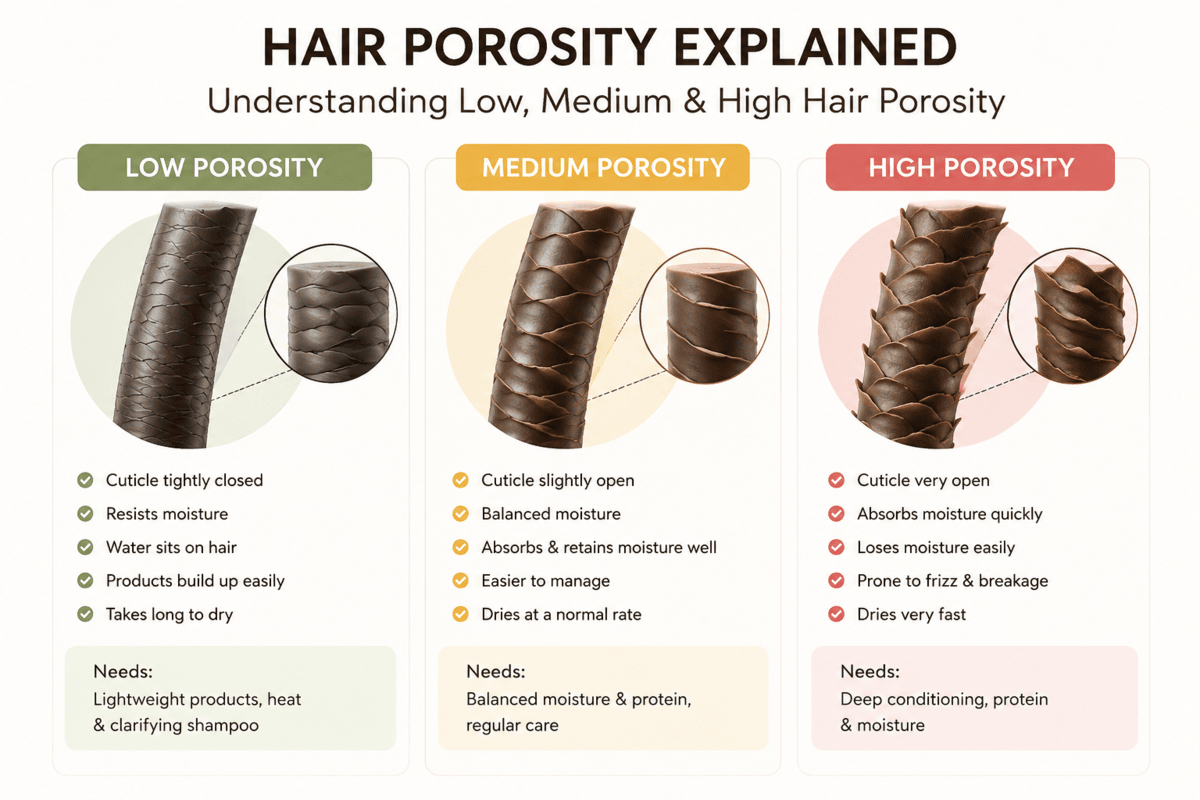
Hair porosity is your hair’s ability to absorb, retain, and release moisture through its outer protective layer, known as the cuticle.
Think of your hair cuticle as tiny overlapping scales.
- When these scales lie flat, moisture has difficulty entering the hair.
- When they are slightly open, moisture enters and stays balanced.
- When they are raised or damaged, moisture enters quickly but escapes just as fast.
As a result, two people can use the exact same hair products yet experience completely different results.
Hair porosity is influenced by several factors, including genetics, heat styling, chemical treatments, environmental exposure, and everyday hair care habits. While some people naturally have low or high porosity hair, others may notice changes over time due to bleaching, coloring, frequent blow-drying, or excessive sun exposure.
For this reason, understanding your hair porosity allows you to choose products and techniques that work with your hair instead of against it.
How to Do a Hair Porosity Test at Home
Hair porosity generally falls into three categories: low, medium, and high.
Low Porosity Hair
Low porosity hair has tightly packed cuticles that make it difficult for moisture to penetrate the hair shaft.
For example, people with low porosity hair often notice that water beads up on their hair instead of soaking in quickly. Hair products may also sit on the surface rather than being fully absorbed.
Although low porosity hair usually appears smooth and shiny, it can become dry if moisture cannot enter effectively. Therefore, choosing the right products is important. You can also explore our article on Best Hair Oils for Hair Growth to learn which lightweight oils may work well without causing product buildup.
Low porosity hair has tightly packed cuticles that make it difficult for moisture to penetrate the hair shaft.
For example, people with low porosity hair often notice that water beads up on their hair instead of soaking in quickly. Hair products may also sit on the surface rather than being fully absorbed.
Although low porosity hair usually appears smooth and shiny, it can become dry if moisture cannot enter effectively. Therefore, choosing the right products is important. You can also explore our article on Best Hair Oils for Hair Growth to learn which lightweight oils may work well without causing product buildup..
Medium Porosity Hair
Overall, medium, or normal, porosity is generally considered a balanced state. Moisture can enter the hair relatively easily, while the hair can still retain a reasonable amount of it.
People with medium porosity hair may find that:
- Hair becomes wet without much difficulty.
- Moisture is retained reasonably well.
- Styling products tend to work effectively.
- Hair is relatively easy to manage.
- Excessive dryness or buildup may be less common.
A simple and consistent routine is often enough. There is usually no need to overload the hair with multiple treatments.
High Porosity Hair
High porosity may occur naturally. However, it is also common after repeated heat styling, bleaching, coloring, or chemical treatments. High porosity hair has a more open or damaged cuticle structure. It may absorb water quickly but can also lose moisture quickly.
Common signs include:
- Hair becomes wet very quickly.
- Hair dries quickly after washing.
- Hair may feel rough or dry.
- Frizz can become more noticeable in humid weather.
- Hair may tangle easily.
- The ends may appear damaged or split.
- Chemically treated hair may become more porous.
If your hair feels particularly dry or damaged, moisturizing is important. However, reducing further damage is equally useful. Our guide on How to Repair Damaged Hair Naturally may also be helpful.
What Causes Hair Porosity?
Porosity isn’t determined only by genetics. The way you care for your hair can influence its condition over time.
Genetics
In general, some people naturally have hair with a more tightly packed cuticle, while others naturally have more porous hair.
Heat Styling
For example, frequent use of flat irons, curling tools, and blow dryers can gradually weaken the hair, particularly when high temperatures are used repeatedly.
Chemical Treatments
Bleaching, coloring, relaxing, perming, and other chemical treatments can affect the hair’s cuticle and increase porosity.
Environmental Exposure
Sunlight, wind, pollution, chlorine, and saltwater can contribute to gradual hair damage.
Mechanical Damage
In addition, rough towel drying, excessive brushing, tight hairstyles, and repeated friction can also contribute to damage.
Why Does Hair Porosity Test Matter?
Understanding your hair’s porosity can help you make more informed choices about products and techniques.
For example, knowing how your hair responds to moisture may help you:
- Select products that feel comfortable on your hair.
- Reduce unnecessary product buildup.
- Improve moisture retention.
- Manage dryness and frizz.
- Decide how often to deep condition.
- Avoid buying products simply because they work for someone else.
Instead of following every hair trend, you can pay closer attention to how your own hair responds.
Hair Porosity Test at Home: 3 Simple Methods
If you want to check your hair porosity at home, there are several commonly used methods. Keep in mind that none of these tests can provide a perfect or definitive measurement of hair porosity.
It is better to consider the results alongside the way your hair normally behaves.
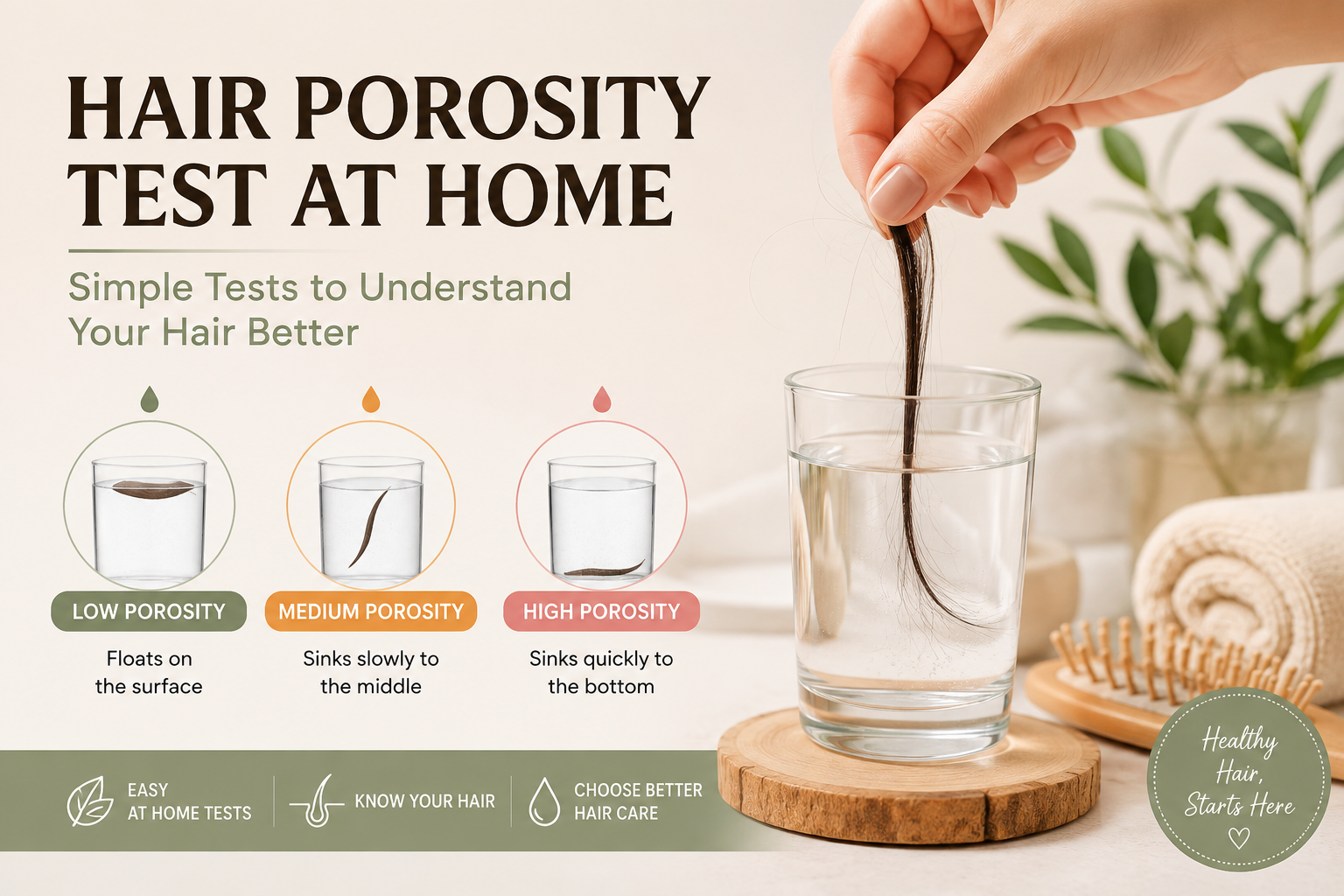
Hair Porosity Test Method 1: Glass of Water Test
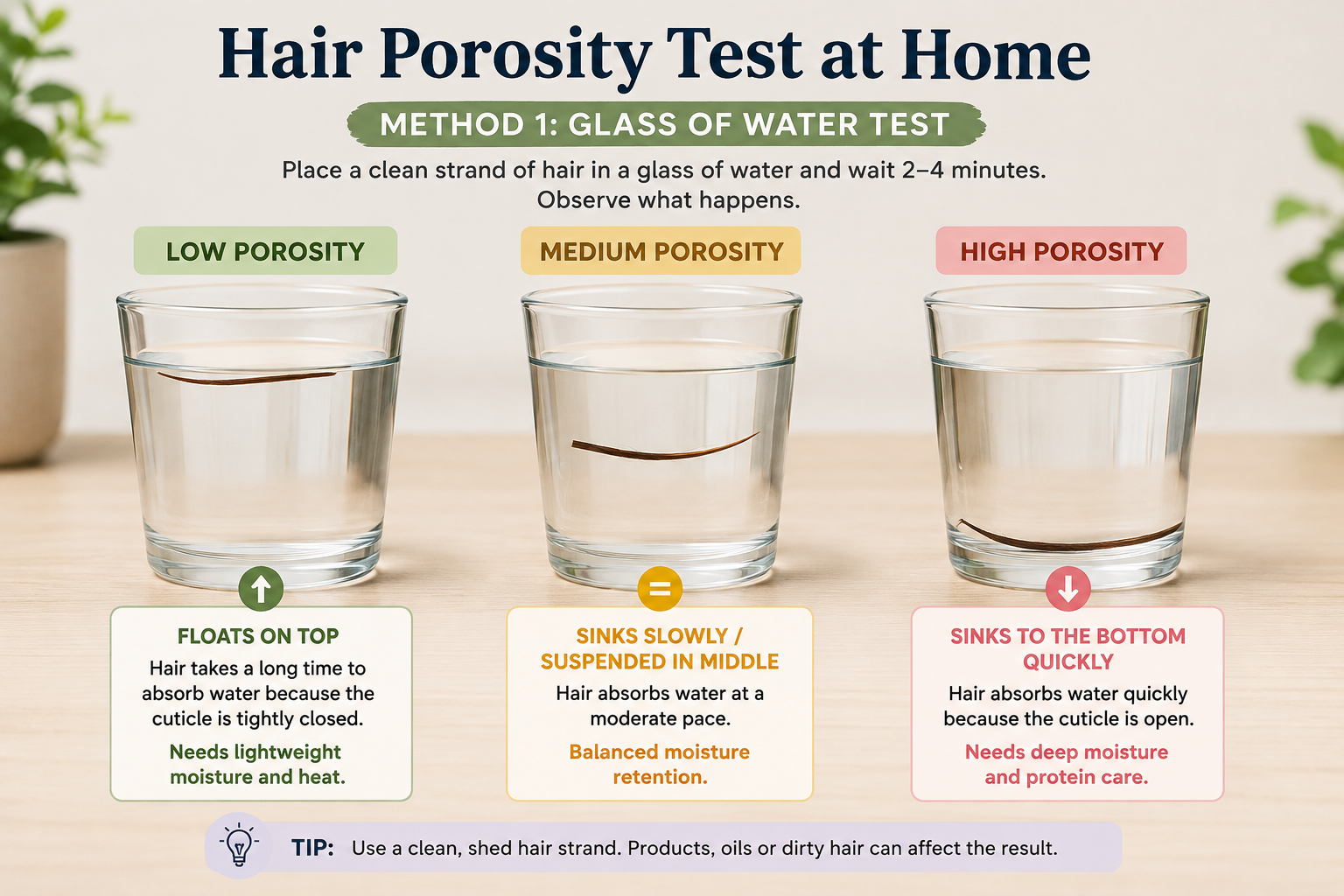
The glass of water test is one of the most popular DIY methods for estimating hair porosity. It is simple, but the result can be influenced by product residue, natural oils, and the condition of the hair.
What You’ll Need
- One clean strand of hair
- A clear glass
- Room-temperature water
Steps
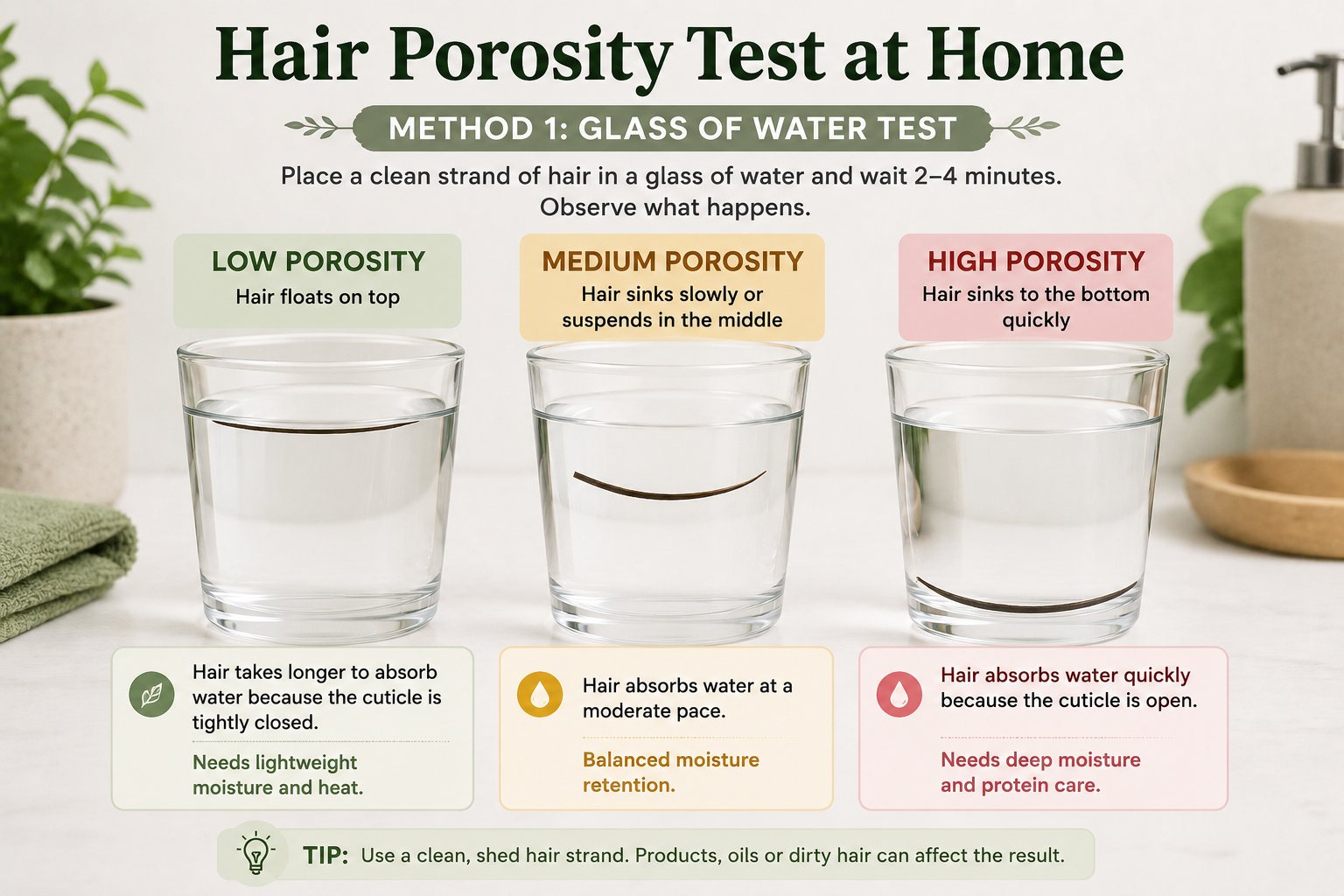
- Wash your hair to remove product buildup.
- Let the hair dry completely.
- Use a naturally shed strand of clean hair.
- Fill a clear glass with room-temperature water.
- Gently place the strand on the surface.
- Leave it undisturbed for about 3–5 minutes.
- Observe what happens to the strand.
A strand that remains near the surface is often interpreted as lower porosity, while one that sinks more quickly is sometimes interpreted as higher porosity.
However, this test should be treated as a general indication rather than a scientific measurement.
Hair Porosity Test Method 2: Spray Bottle Test
The spray bottle method looks at how your actual hair responds when water is applied.
Steps
- Start with clean, dry hair.
- Separate a small section.
- Spray a small amount of water onto the hair.
- Watch how the water behaves.
If water sits on the hair as droplets for a while, it may indicate lower porosity. When the water gradually disappears into the hair, this may suggest medium porosity. In contrast, water that is absorbed almost immediately may indicate higher porosity
This method can be useful because it looks at how your own hair behaves rather than relying on one individual strand.
Hair Porosity Test Method 3: Slip Test
The slip test focuses on the feel of an individual strand.
Take a clean strand of hair and gently slide your fingers from the tip toward the root.
You may notice:
- Smooth feeling: may indicate a relatively smooth cuticle.
- Slight texture: may suggest medium porosity.
- Rough or uneven feeling: may indicate a more raised or damaged cuticle.
This test is subjective, so it should not be used by itself to determine your exact porosity.
Which Hair Porosity Test at Home Is Most Reliable?
There isn’t one simple at-home test that can accurately determine your exact hair porosity.
The glass of water test is widely discussed online, but factors such as product buildup, oils, hair damage, and the characteristics of an individual strand can affect the result.
For a more useful picture, compare:
- The glass of water test
- The spray bottle test
- The way your hair normally responds to water
- How quickly your hair dries
- Whether products tend to sit on the surface or absorb easily
If several observations point in the same direction, you may have a better idea of your hair’s porosity.
Understanding Your Hair Porosity Test at Home Results
Once you’ve tried the tests, look at the result together with your everyday hair behavior.
Low Porosity Hair
If water tends to remain on the surface and your hair takes a long time to become completely wet, your hair may have lower porosity.
Common Signs
- Water beads on the surface.
- Hair takes longer to get wet.
- Products can leave residue.
- Hair dries slowly.
- Hair may look smooth or shiny.
Hair Care Tips
Choose lightweight shampoos, conditioners, and leave-in products. When deep conditioning, gentle warmth from a warm towel or heat cap may help the treatment work more comfortably with the hair.
Avoid applying large amounts of heavy oils and thick butters if they leave your hair feeling coated or greasy.
Ingredients That May Work Well
- Aloe vera
- Argan oil
- Grapeseed oil
- Lightweight leave-in conditioners
- Glycerin-based products
Remember that an ingredient that works for one person may not work the same way for everyone.
Medium Porosity Hair
If your hair absorbs water fairly easily and doesn’t seem to struggle significantly with moisture retention or buildup, it may fall into the medium-porosity range.
Common Signs
- Hair becomes wet without much difficulty.
- Hair retains moisture reasonably well.
- Products absorb relatively easily.
- Hair holds styles well.
- Excessive dryness is less common.
Hair Care Tips
Keep your routine simple and consistent. Regular cleansing and occasional deep conditioning can help maintain the condition of the hair.
Also try to limit unnecessary heat and chemical processing.
Ingredients That May Work Well
- Coconut milk
- Shea butter in moderation
- Jojoba oil
- Panthenol
- Protein treatments when appropriate
High Porosity Hair
If your hair becomes wet very quickly, dries quickly, and often feels dry or rough, it may be more porous.
Common Signs
- Hair absorbs water quickly.
- Hair dries quickly.
- Frizz is noticeable in humid weather.
- Ends may feel rough.
- Hair tangles easily.
- Hair may break more easily when damaged.
- Color may fade more quickly after chemical processing.
Hair Care Tips
Focus on maintaining moisture and reducing further damage.
Rich conditioners, deep-conditioning treatments, and leave-in conditioners can be useful. Applying a small amount of oil after moisturizing may also help reduce moisture loss.
Try to minimize unnecessary heat styling and use a heat protectant when heat tools are needed.
Ingredients That May Work Well
- Shea butter
- Avocado oil
- Olive oil
- Castor oil
- Ceramides
- Protein treatments when needed
Common Mistakes in a Hair Porosity Test at Home
Small details can affect the results of a DIY test.
Try to avoid:
- Testing hair covered with styling products.
- Using a strand coated with conditioner or oil.
- Putting several strands into the glass at the same time.
- Using very hot or very cold water.
- Treating one test as a definitive diagnosis.
- Ignoring the effects of bleaching, coloring, or heat damage.
Also remember that the condition of your hair can change over time.
Best Hair Care Products After a Hair Porosity Test at Home
Your hair porosity can help guide your product choices, but it shouldn’t be the only factor you consider. Hair texture, thickness, scalp condition, styling habits, and personal preference also matter.
For another comparison of popular hair treatments, see our article on Rice Water vs Rosemary Water for Hair Growth.
Products for Low Porosity Hair
Lightweight products are often more comfortable for hair that gets weighed down easily.
You might consider:
- Lightweight moisturizing shampoo
- Silicone-free conditioner
- Water-based leave-in conditioner
- Aloe vera gel
- Argan oil
- Grapeseed oil
If heavy products leave a noticeable coating, reduce the amount or use them less frequently.
Products for Medium Porosity Hair
Medium porosity hair generally doesn’t need an overly complicated routine.
A basic routine might include:
- Gentle sulfate-free shampoo
- Hydrating conditioner
- Leave-in conditioner
- Lightweight hair serum
- Heat protectant before styling
Consistency is often more useful than constantly adding new products.
Products for High Porosity Hair
Hair that loses moisture quickly may benefit from richer conditioning products.
Consider:
- Moisturizing shampoo
- Deep conditioner
- Leave-in conditioner
- Weekly hair mask
- Shea butter
- Avocado oil
- Olive oil
- Castor oil
If your hair has been chemically treated or damaged by heat, occasional protein treatments may also be useful depending on how your hair responds.
Can Hair Porosity Change Over Time?
Yes. Your natural porosity may be influenced by genetics, but the condition of the hair can change as a result of everyday wear and damage.
Hair may become more porous after:
- Bleaching
- Hair coloring
- Chemical straightening
- Frequent heat styling
- Excessive sun exposure
- Chlorine exposure
- Saltwater exposure
Using gentler hair-care practices and reducing unnecessary damage can help maintain the condition of your hair.
Common Myths About Hair Porosity at Home
There are several misconceptions about hair porosity. Here are a few worth knowing.
Myth 1: The Water Test Is Always Accurate
Fact: The glass-of-water test is only a general DIY method. Product buildup, natural oils, and hair condition can influence the result.
Myth 2: High Porosity Hair Is Always Damaged
Fact: Not necessarily. Some people may naturally have more porous hair, while others develop increased porosity after chemical or heat damage.
Myth 3: Low Porosity Hair Doesn’t Need Moisture
Fact: Low porosity hair still needs moisture. The main challenge may be finding products and techniques that don’t leave the hair feeling heavy or coated.
Myth 4: Hair Porosity Never Changes
Fact: The condition of the hair can change with heat styling, chemical treatments, and environmental exposure.
Hair Porosity Test at Home FAQs
Can a hair porosity test at home determine my exact hair type?
No. A DIY porosity test can provide clues about how your hair responds to moisture, but it cannot determine your exact hair type or provide a definitive measurement of porosity.
Using several observations together can give you a better understanding.
Is the glass of water test accurate?
It can give you a general idea, but it isn’t a scientifically precise test. Product residue, natural oils, and the condition of the individual strand can affect the result.
For that reason, consider the water test alongside your hair’s everyday behavior.
Can I have different porosity levels on different parts of my hair?
Yes. Hair that has been bleached, colored, chemically treated, or repeatedly exposed to heat may behave differently from newer, untreated hair near the roots.
Which oils are best for low porosity hair?
Lightweight oils such as argan, grapeseed, and jojoba oil may be more comfortable for hair that gets weighed down easily.
Which oils are best for high porosity hair?
Richer oils such as avocado, olive, and castor oil may be useful for sealing in moisture, although the best choice depends on how your individual hair responds.
Is hair porosity the same as hair thickness?
No. Porosity describes how hair interacts with moisture, while thickness refers to the diameter of an individual hair strand.
Final Thoughts About Hair Porosity Test at Home
A hair porosity test at home can be a useful starting point if you’re trying to understand why your hair behaves differently with certain products.
The glass of water test, spray bottle method, and simple observations such as how quickly your hair gets wet and dries can all provide useful clues. However, none of these methods should be treated as a perfect or definitive test.
Instead of focusing on one result, pay attention to your hair over time. Notice what happens when you use different products, how long your hair stays moisturized, and whether it tends to become weighed down, dry, or frizzy.
Ultimately, healthy hair care is less about following every trend and more about understanding what works for your own hair.
Choosing the right shampoo is another important part of a basic hair-care routine. You can learn more in our guide to Sulfate-Free Shampoo Benefits.
For additional information about hair and scalp health, you can also explore trusted resources from the American Academy of Dermatology, Cleveland Clinic, and the National Institutes of Health.