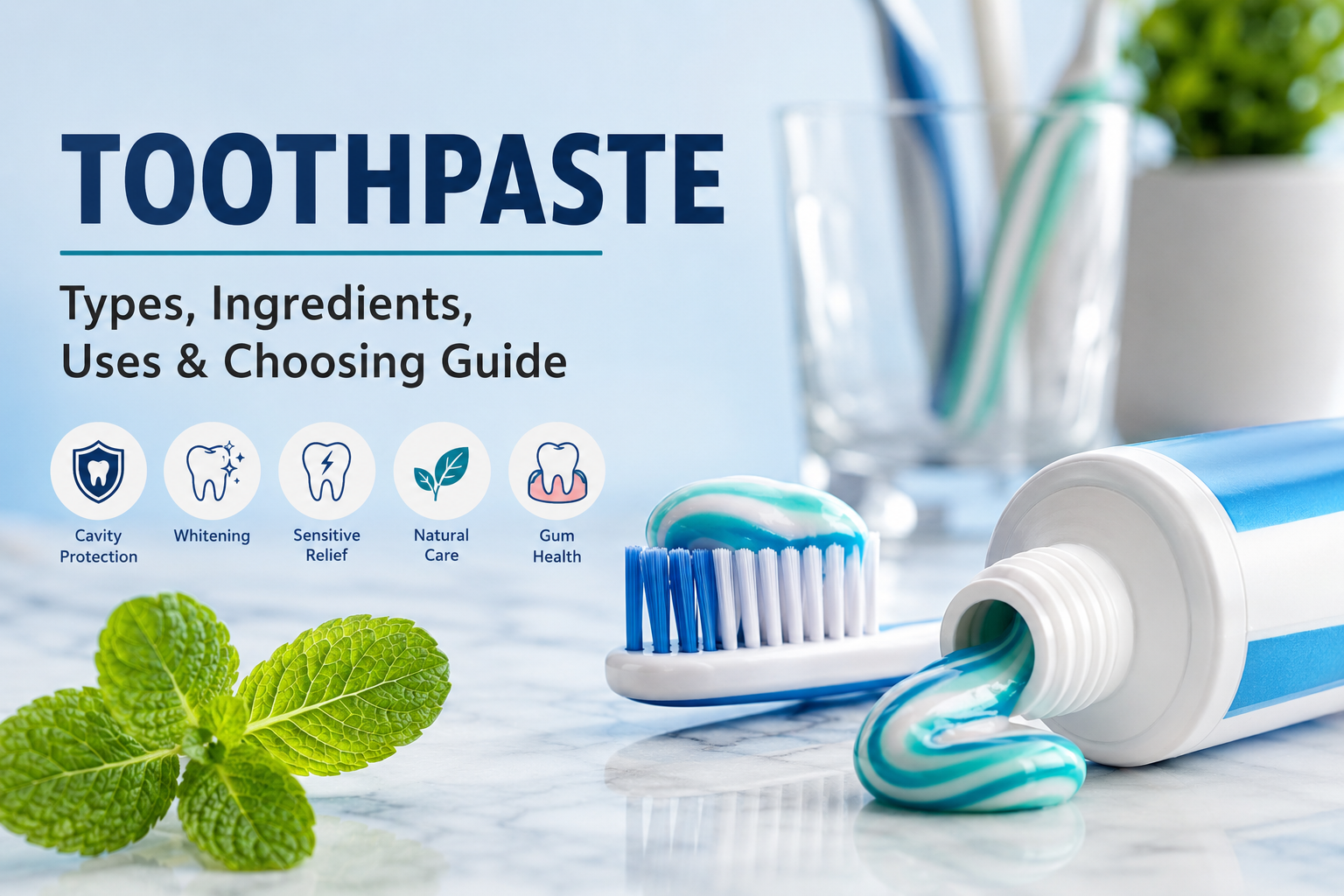
Toothpaste is an essential part of daily oral hygiene. It helps remove plaque, freshen breath, protect enamel, prevent cavities, and support healthy gums when used alongside proper brushing and flossing. Understanding the types of Toothpaste and the intended banalities of Toothpaste (commonly understood as its general uses or benefits) can help you select the best product for your oral health needs.
This guide explains the different types of toothpaste, their key ingredients, who should use them, and how to choose the right one based on your dental concerns.
Toothpaste
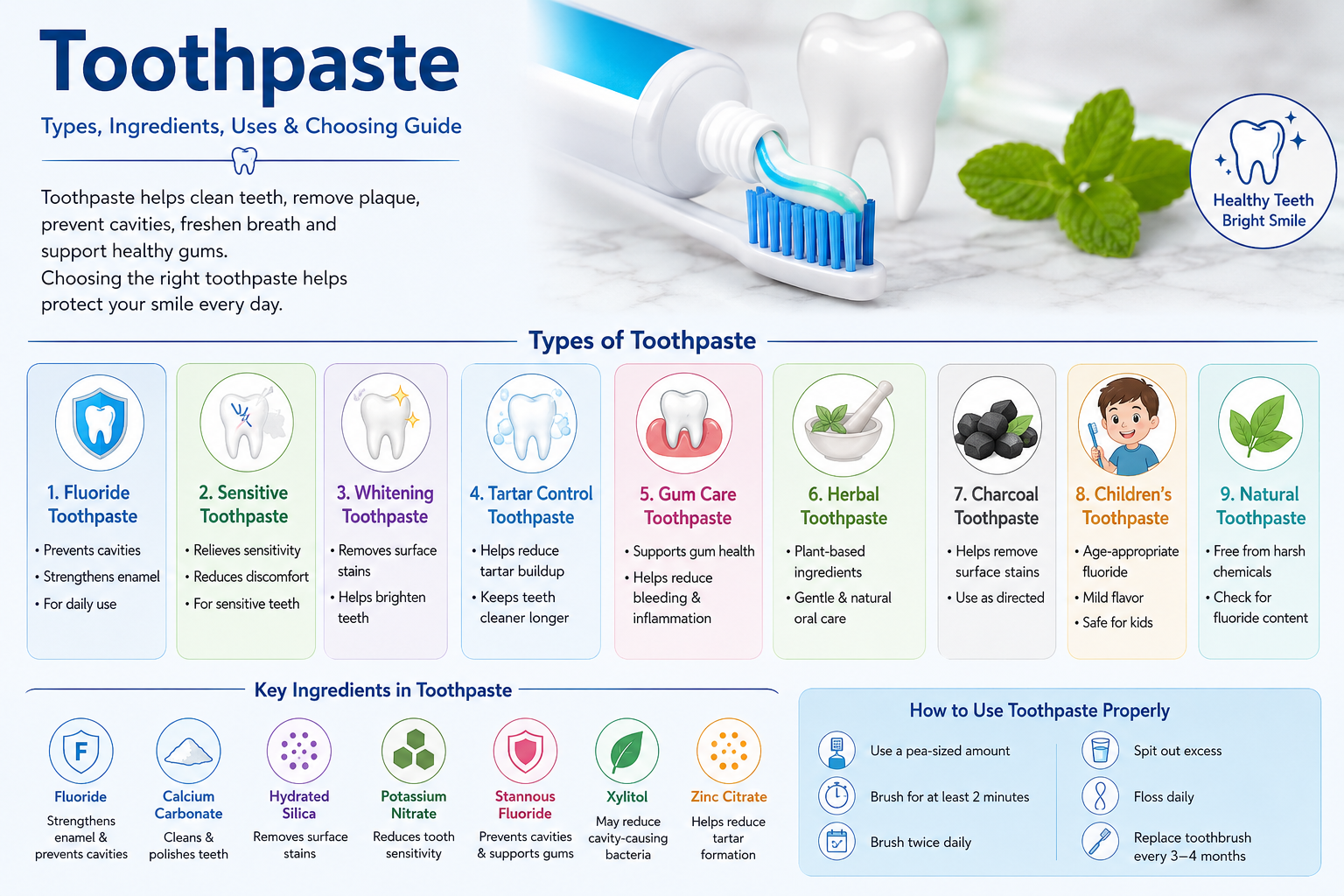
Toothpaste is a paste or gel formulated to clean teeth, reduce plaque, strengthen enamel, and promote healthy gums. Modern toothpaste contains active ingredients that target specific oral health concerns such as cavities, tooth sensitivity, gum disease, tartar buildup, or teeth whitening.
Brushing with fluoride toothpaste twice daily is widely recommended by dental professionals.
Types of Toothpaste
1. Fluoride Toothpaste
Fluoride toothpaste is the most commonly recommended option.
Best For
- Daily cavity prevention
- Strengthening enamel
- Adults and children (age-appropriate formulations)
Common Ingredients
- Sodium fluoride
- Stannous fluoride
- Sodium monofluorophosphate
2. Sensitive Toothpaste
Designed for people who experience pain from hot, cold, sweet, or acidic foods.
Helps With
- Tooth sensitivity
- Exposed dentin
- Comfortable brushing
Common Ingredients
- Potassium nitrate
- Stannous fluoride
- Arginine
3. Whitening Toothpaste
These formulas help remove surface stains caused by tea, coffee, tobacco, and certain foods.
Suitable For
- Mild tooth discoloration
- Maintaining professional whitening results
Common Ingredients
- Hydrated silica
- Baking soda
- Hydrogen peroxide (in some formulas)
4. Tartar Control Toothpaste
This toothpaste helps reduce tartar accumulation and plaque buildup.
Best For
- People prone to tartar
- Maintaining cleaner teeth between dental visits
Common Ingredients
- Pyrophosphates
- Zinc citrate
5. Gum Care Toothpaste
Formulated to support gum health and reduce inflammation.
Suitable For
- Bleeding gums
- Gingivitis
- Gum sensitivity
Common Ingredients
- Stannous fluoride
- Antibacterial agents
- Herbal extracts (in some products)
6. Herbal Toothpaste
Herbal toothpaste uses plant-based ingredients while still providing cleaning action.
Common Herbal Ingredients
- Neem
- Clove
- Tea tree
- Aloe vera
- Peppermint
Choose a fluoride-containing herbal toothpaste whenever possible for cavity protection.
7. Charcoal Toothpaste
Activated charcoal toothpaste is marketed for stain removal and whitening.
Considerations
- May remove surface stains
- Can be abrasive if used excessively
- Usually not recommended for daily long-term use without professional advice
8. Children’s Toothpaste
Children’s toothpaste contains age-appropriate fluoride levels and mild flavors.
Features
- Lower fluoride concentration for younger children
- Kid-friendly taste
- Gentle formulation
Parents should supervise brushing to minimize swallowing.
9. Natural Toothpaste
Natural toothpaste often excludes artificial flavors, colors, sulfates, or preservatives.
Some products may not contain fluoride, so always check the label if cavity prevention is your goal.
Key Ingredients in Toothpaste
Different toothpaste formulas contain different active ingredients depending on their purpose.
| Ingredient | Purpose |
|---|---|
| Fluoride | Strengthens enamel and prevents cavities |
| Calcium carbonate | Cleans teeth |
| Hydrated silica | Removes surface stains |
| Potassium nitrate | Reduces tooth sensitivity |
| Stannous fluoride | Prevents cavities and supports gum health |
| Baking soda | Neutralizes acids and gently polishes teeth |
| Xylitol | May reduce cavity-causing bacteria |
| Zinc citrate | Helps reduce tartar formation |
Uses of Toothpaste
The primary uses of toothpaste include:
- Cleaning teeth
- Removing plaque
- Preventing cavities
- Freshening breath
- Strengthening enamel
- Reducing tooth sensitivity
- Supporting healthy gums
- Removing surface stains
- Helping prevent tartar buildup
These are often what users mean when searching for the banalities of Toothpaste, although the more accurate term is benefits or uses of Toothpaste.
How to Choose the Right Toothpaste
Choose toothpaste based on your dental needs.
| Dental Concern | Recommended Toothpaste |
|---|---|
| Cavities | Fluoride toothpaste |
| Sensitive teeth | Sensitive toothpaste |
| Yellow stains | Whitening toothpaste |
| Gum problems | Gum care toothpaste |
| Heavy tartar | Tartar control toothpaste |
| Natural preference | Herbal or natural toothpaste with fluoride |
| Children | Age-specific children’s toothpaste |
How to Use Toothpaste Properly
For the best oral health results:
- Use a soft-bristled toothbrush.
- Apply a pea-sized amount of toothpaste.
- Brush for at least two minutes.
- Brush twice daily.
- Spit out excess toothpaste instead of swallowing.
- Floss once every day.
- Replace your toothbrush every three to four months.
Who Should Use Different Types of Toothpaste?
Different toothpaste formulas are designed for different oral care needs.
Fluoride Toothpaste
Ideal for most adults and children who need daily cavity protection.
Sensitive Toothpaste
Suitable for people with tooth sensitivity or exposed roots.
Whitening Toothpaste
Best for adults with mild surface stains.
Gum Care Toothpaste
Recommended for people with early gum problems or bleeding gums.
Herbal Toothpaste
Suitable for those who prefer plant-based oral care products, provided the toothpaste also contains fluoride.
Children’s Toothpaste
Designed specifically for children according to age and fluoride recommendations.
Tips for Choosing Toothpaste
- Look for fluoride unless advised otherwise by your dentist.
- Select toothpaste approved by recognized dental organizations.
- Avoid overly abrasive whitening toothpaste for daily long-term use.
- Match the toothpaste to your oral health concern.
- Ask your dentist for personalized recommendations if you have ongoing dental problems.
Frequently Asked Questions
Which type of toothpaste is best?
Fluoride toothpaste is generally considered the best option for most people because it helps prevent cavities and strengthens enamel.
Can whitening toothpaste damage teeth?
Most whitening toothpastes are safe when used as directed, but highly abrasive formulas may wear enamel over time if overused.
Is herbal toothpaste effective?
Herbal toothpaste can be effective for cleaning teeth. For cavity protection, choose one that also contains fluoride.
Should children use adult toothpaste?
Young children should use toothpaste specifically formulated for their age and use only a small amount under adult supervision.
Can I use sensitive toothpaste every day?
Yes. Most sensitivity toothpastes are designed for daily long-term use.
Conclusion
Choosing the right toothpaste is an important step toward maintaining healthy teeth and gums. Understanding the types of Toothpaste helps you match your oral care routine to your specific needs, whether you want cavity protection, relief from sensitivity, gum care, or stain removal. For most people, a fluoride toothpaste recommended by dental professionals provides the best everyday protection when combined with proper brushing, flossing, and regular dental checkups.