
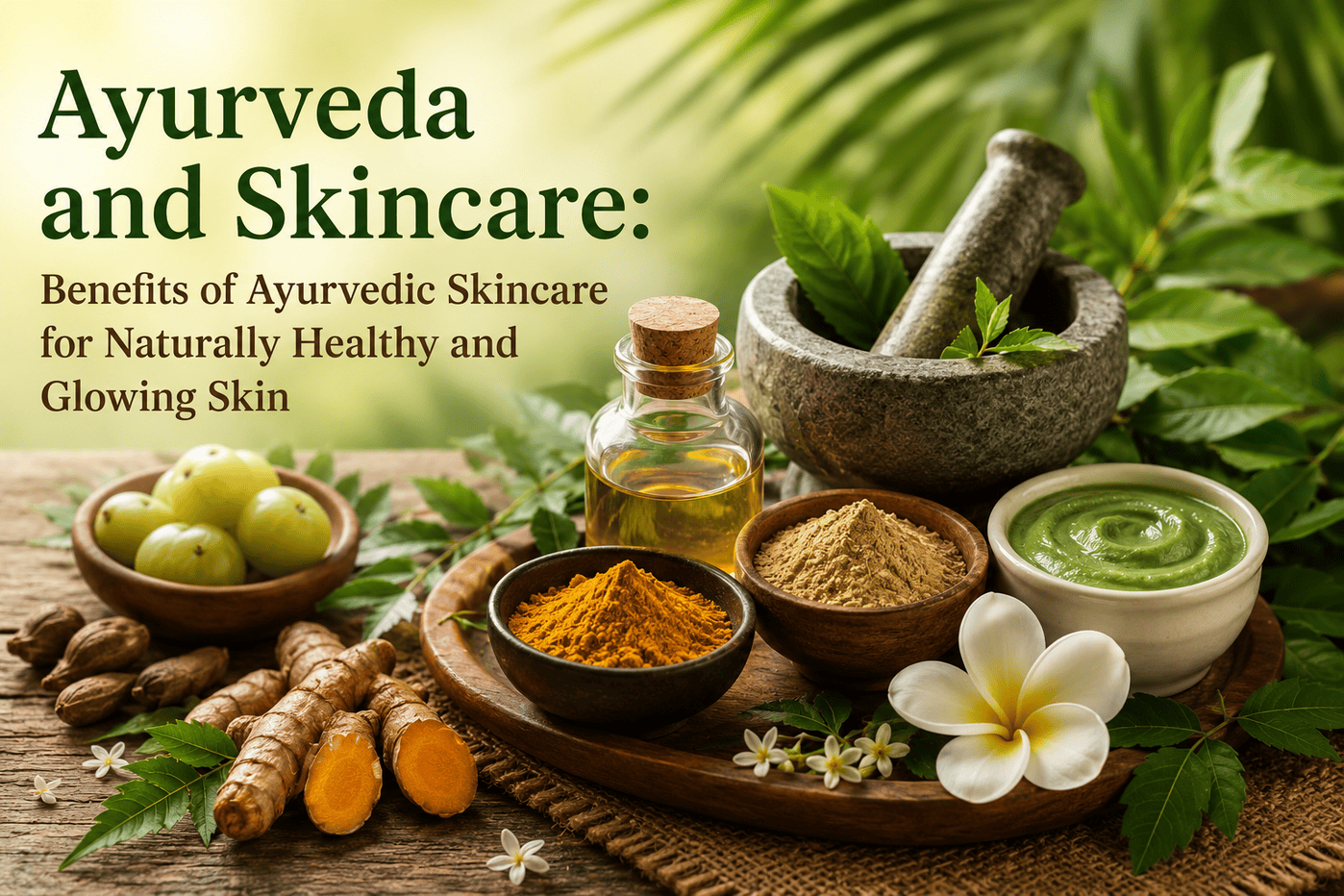
In recent years, more people have started embracing natural beauty routines that focus on long-term skin health rather than quick fixes. As a result, interest in Ayurveda has grown significantly among skincare enthusiasts. In particular, many people appreciate its holistic approach to beauty and wellness. Among these approaches, Ayurveda stands out as one of the world’s oldest holistic wellness systems. Originating in India over 5,000 years ago, Ayurveda views healthy skin as a reflection of overall physical, mental, and emotional balance.
The growing popularity of Ayurvedic beauty rituals has sparked interest in understanding the many Benefits of Ayurvedic Skincare. From herbal ingredients and personalized routines to holistic lifestyle recommendations, Ayurvedic skincare offers a natural path to radiant and healthy-looking skin.
What Is Ayurvedic Skincare?
Ayurveda forms the foundation of Ayurvedic skincare. Unlike conventional skincare, which often focuses solely on external treatments, Ayurveda considers both internal and external factors. Therefore, it emphasizes balanced nutrition, proper hydration, quality sleep, and stress management alongside topical skincare. As a result, practitioners aim to support overall skin health rather than simply address visible concerns.
Understanding Ayurvedic Skin Types
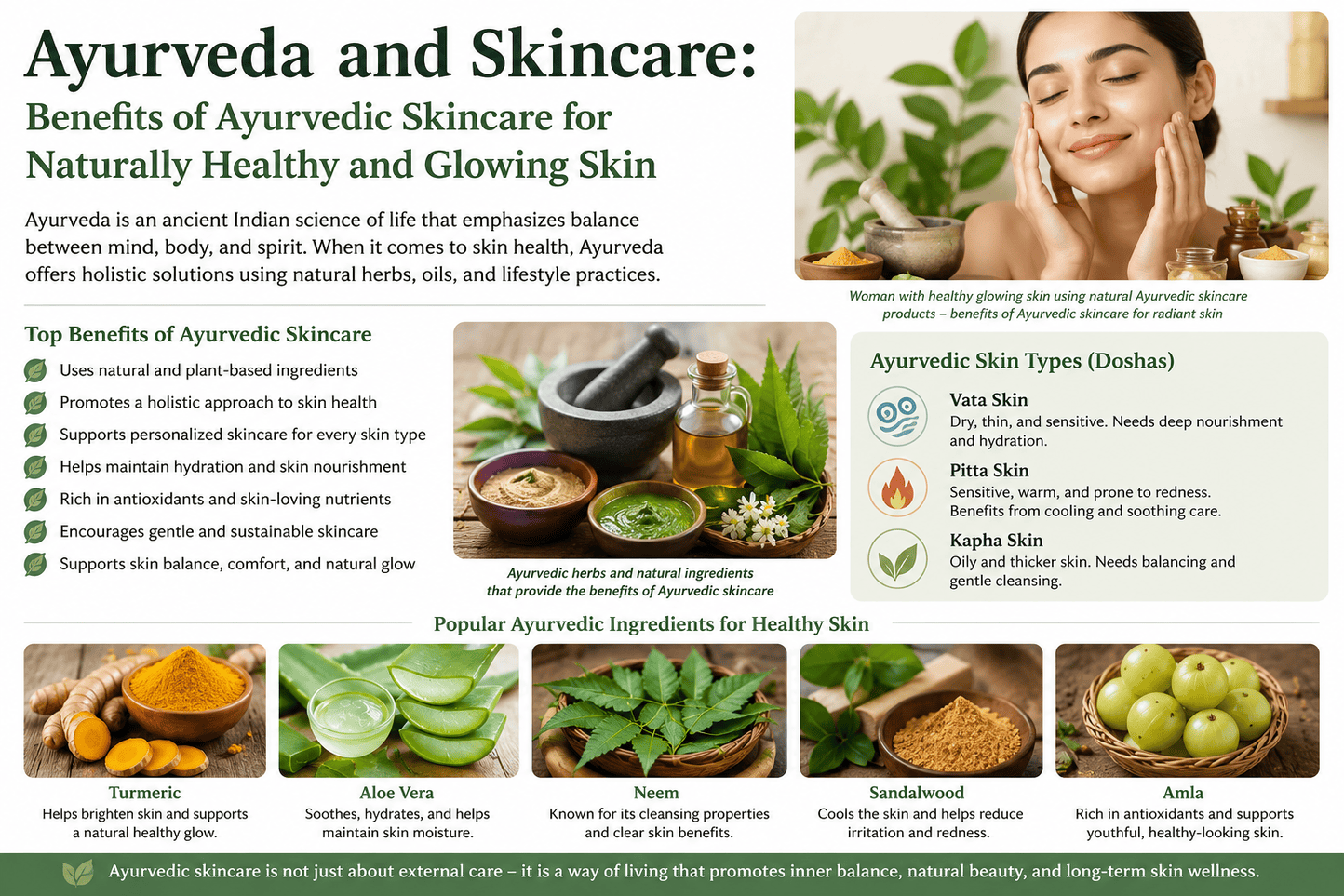
Vata (Dry) Skin
Vata skin tends to be dry, thin, and prone to dehydration and premature wrinkles. Nourishing oils and moisturizing ingredients are commonly recommended.
Pitta (Sensetive) Skin
Pitta skin is often sensitive, warm, and susceptible to redness, acne, and irritation. Practitioners traditionally use cooling herbs such as aloe vera and sandalwood to soothe the skin.
Kapha (Oily) Skin
Kapha skin is generally thicker and oilier, with a tendency toward enlarged pores and breakouts. Gentle exfoliation and balancing ingredients help maintain skin clarity.
Top Benefits of Ayurvedic Skincare
1. Uses Natural and Plant-Based Ingredients
One of the primary Benefits of Ayurvedic Skincare is its reliance on botanical ingredients. Traditional Ayurvedic formulations often include turmeric, neem, sandalwood, aloe vera, manjistha, rose water, and tulsi. These natural ingredients have been used for centuries to support healthy skin and promote a radiant complexion.
2. Promotes a Holistic Approach to Skin Health
Ayurveda believes that beautiful skin starts from within. Rather than treating symptoms alone, Ayurvedic skincare encourages balanced nutrition, proper digestion, adequate sleep, and stress management to support skin wellness.
3. Supports Personalized Skincare Routines
Unlike one-size-fits-all skincare methods, Ayurvedic skincare is highly personalized. Products and routines are selected according to an individual’s dosha and specific skin concerns, allowing for a more customized approach to skin care.
4. Helps Maintain Skin Hydration
Ayurvedic beauty rituals commonly use sesame, coconut, and sunflower oils to nourish and moisturize the skin. These oils can support the skin barrier and help maintain softness and elasticity.
5. Contains Antioxidant-Rich Ingredients
Many Ayurvedic herbs and spices are rich in antioxidants. Ingredients like turmeric and amla are traditionally valued for helping protect the skin from environmental stressors and supporting a youthful appearance.
6. Encourages Gentle Skin Care Practices
Ayurvedic skincare often uses mild cleansing and exfoliating ingredients such as chickpea flour, almond flour, oatmeal, and herbal powders. These ingredients help cleanse the skin without excessively stripping away natural oils.
7. Supports Skin Comfort and Balance
Traditional Ayurvedic ingredients such as aloe vera, turmeric, neem, and sandalwood are commonly used to soothe and balance the skin. These ingredients are valued for their calming and skin-friendly properties.
Popular Ayurvedic Ingredients for Skin Care
1. Turmeric
Known for its antioxidant and soothing properties, turmeric is widely used in Ayurvedic beauty treatments to promote brighter-looking skin.
2. Aloe Vera
Aloe vera is traditionally used to cool, hydrate, and calm the skin, making it a popular ingredient for sensitive skin types.
3. Tulsi (Holy Basil)
Ayurveda values tulsi for its cleansing and skin-supportive properties and is commonly included in natural skincare formulations.
4. Neem
People have used neem for generations in Ayurvedic skincare to help maintain clear and healthy-looking skin.
5. Sandalwood
Many people appreciate sandalwood for its cooling and soothing qualities and is frequently used in Ayurvedic face masks and oils.
Simple Ayurvedic Skincare Tips
- Identify your dominant dosha and choose products accordingly.
- Use natural cleansers and gentle exfoliants.
- Incorporate facial massage with suitable herbal oils.
- Stay hydrated throughout the day.
- Prioritize balanced nutrition and quality sleep.
- Practice stress-reducing activities such as yoga and meditation.
Conclusion
The Benefits of Ayurvedic Skincare go far beyond achieving a temporary glow. By combining natural ingredients, personalized care, and healthy lifestyle practices, Ayurveda promotes balanced and healthy-looking skin from the inside out. Whether you want to simplify your beauty routine or embrace a more holistic approach to skincare, Ayurvedic principles offer a gentle and sustainable path to long-term skin wellness.
Source:https://pmc.ncbi.nlm.nih.gov/articles/PMC3151377/
See Also:https://www.radiantglowlab.com/benefits-of-exfoliating-toner/